 ValourAI
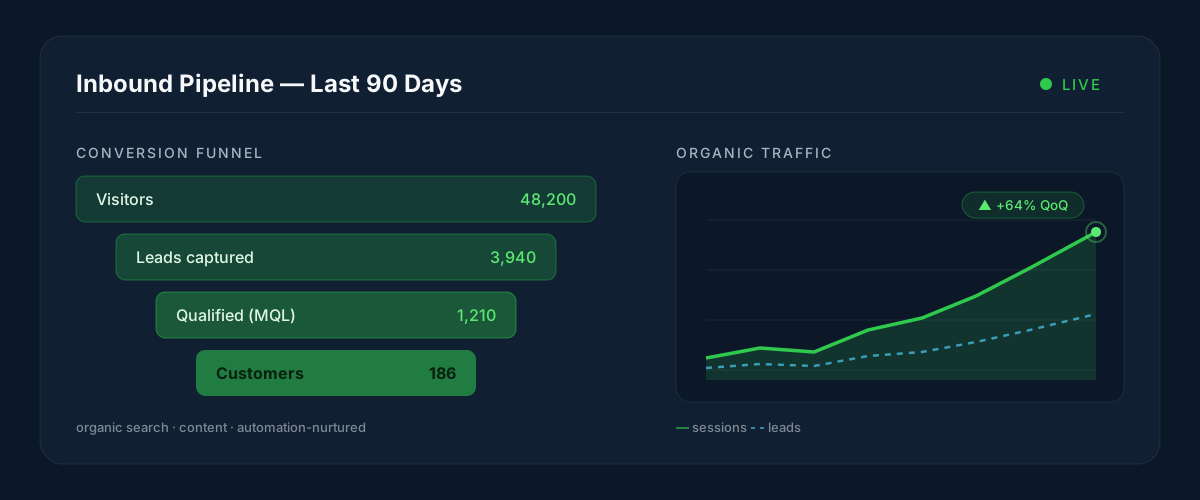
What inbound actually is — and why it compounds
Inbound marketing means earning attention instead of buying or interrupting it: prospective customers find you through search, useful content, tools and referrals, then convert on their own timeline. Its defining economic property is compounding. An article that ranks, a comparison page that converts or a free tool that gets shared keeps producing leads long after it was paid for — unlike an ad, which stops the moment the budget does.
The trade-off is time. Inbound is slow to start and unforgiving of inconsistency. Which is exactly why the winners are rarely the companies with the best writers — they are the companies with the best system behind the writing.
Content earns the visit. The system you build behind it earns the customer.
The four layers of an inbound engine
Every effective inbound operation we have seen — or built the infrastructure for — has the same four layers:
- Attract: search-optimized articles, comparison pages and free tools targeting the questions your buyers actually ask
- Capture: lead magnets, forms and calls-to-action that trade real value for contact details
- Nurture: automated email sequences and lead scoring that move a curious reader toward a sales conversation
- Measure: analytics that attribute revenue to content, so you double down on what works instead of guessing
Most teams do the first layer and stop. That is how you end up with traffic charts that look great in meetings and a sales pipeline that never notices.
Where engineering makes the difference
This is the part of inbound we know best, because it is what clients hire ValourAI to build: the technical spine that turns content into pipeline. In practice that means CRM integration so no lead falls through the cracks, marketing automation that triggers the right follow-up at the right moment, lead-scoring models that tell sales who is actually ready to talk, and dashboards that show — in revenue, not page views — what the content operation is worth.
AI has raised the ceiling here. Automated lead enrichment, intent classification and content-performance prediction used to be enterprise-only capabilities; today we build them into systems for startups on startup budgets.
When inbound is the right bet
Inbound suits businesses whose customers research before they buy, whose deal cycles allow a few months of ramp-up, and who want acquisition costs that fall over time instead of rising with every campaign. If you need pipeline this quarter, pair it with targeted outreach — we cover that side in our companion piece on outbound marketing. The strongest go-to-market motions run both: outbound for immediacy, inbound for compounding.
If you are ready to treat your marketing like a system instead of a series of campaigns, we would be glad to help you architect it.